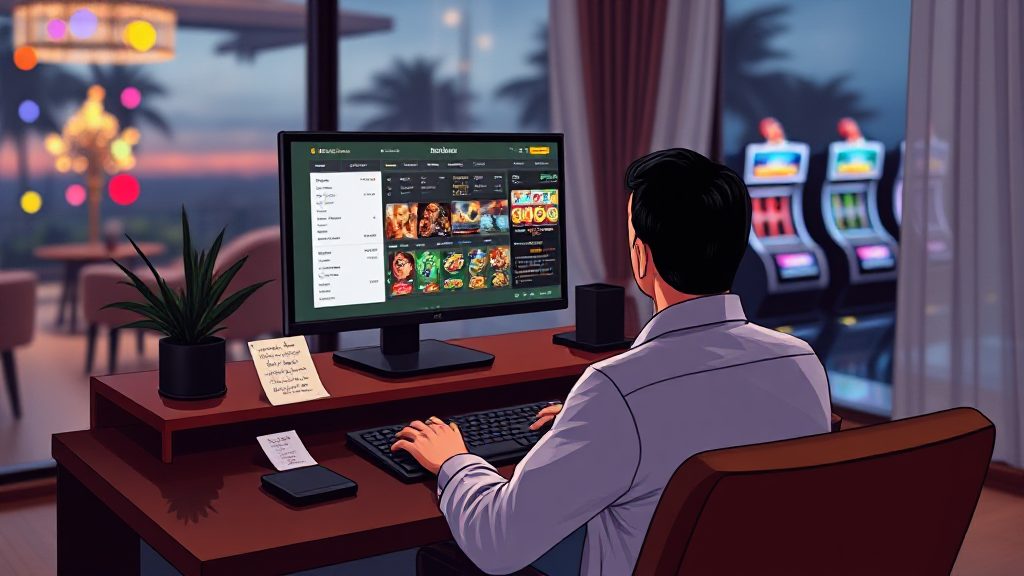
Designing a Deliberate ONICPLAY Routine Instead of an Automatic One
There is a quiet difference between a routine you chose and one that formed on its own. The first has a purpose you can name; the second often has a trigger you never noticed. When people open onicplay, that difference matters more than any single game choice, because the shape of the session is usually decided before the first click.
This is not a warning or a lecture. It is an examination of how automatic habits around an online gambling platform get built, and how a player who wants to stay deliberate can redesign the loop without pretending the loop does not exist.
Why Automatic Routines Form Around ONICPLAY Sessions
Automatic routines are efficient. The brain likes a fixed sequence because it costs less attention than a fresh decision each time. That is why a session can start with a vague intention and end in a familiar pattern of tabs, promos, and leaderboard checks.
The platform itself supplies plenty of cues. ONICPLAY brings together sports betting, slots, casino games, poker, lotto, arcade, and fishing games under one login, along with promotions and a referral program. Each of those areas has its own rhythm, and the mix makes it easy for a session to drift from one category to another without a clear stopping point.
The three parts of a habit loop
Most automatic sessions follow a simple loop: a trigger, a repeated action, and a reward that makes the action feel worth repeating. The trigger might be a notification, a free evening, or the end of a workday. The action is the login. The reward is the small hit of novelty or anticipation that comes with checking odds, spinning reels, or seeing where you sit on a leaderboard.
None of those parts is inherently bad. The problem is when they run without review. A deliberate routine keeps the same parts but adds a moment of choice between the trigger and the action.
Common cues that start a session
- Time-based cues, such as a specific hour when the house goes quiet.
- Emotion-based cues, such as boredom, stress, or the urge to celebrate.
- Platform-based cues, such as a promotion banner or a leaderboard reset.
- Social cues, such as a friend mentioning a match or a referral link.
Naming the cue is the first act of design. A cue you can describe is a cue you can interrupt.
Common Habit Loops Players Build Without Noticing
Automatic loops rarely announce themselves. They show up as small, reasonable-looking behaviors that repeat until they feel compulsory. Recognizing the most common ones is useful because each has a different fix.
The check-in loop
This is the habit of opening the platform to see what is happening rather than to do something specific. It often starts with a quick look at sports betting odds or a promotion page and ends twenty minutes later with no clear outcome. The reward is information, not action, which makes the loop easy to justify.
The fix is to attach a purpose to the login. If there is no specific thing to check, the session has no job to do.
The chase loop
Here the reward is the attempt to recover a previous result. It can appear in any category, from slots to poker, and it is the loop most likely to stretch a session past its intended length. The tell is a session that continues because of what already happened rather than because of what you planned.
A session that exists to correct the last one is no longer a choice. That is the point where a deliberate routine needs a hard stop, not a softer intention.
The browse loop
ONICPLAY’s breadth makes browsing a habit in itself. Moving from fishing games to arcade to lotto can feel like exploration, and sometimes it is. But browsing without a target is a way of staying in the session while avoiding a decision. It is low-stakes in isolation and expensive in aggregate.
The leaderboard loop
Leaderboards and referral programs add a social and competitive layer. Checking your position can become a separate habit from playing, and it pulls attention back to the platform even on days when you had no intention to play. The reward is status or progress, which is moreish precisely because it never fully resolves.
Redesigning the Loop So the Choice Stays Yours
Redesign does not mean removal. It means putting a deliberate decision where an automatic one used to sit. The most practical approach is to build a small set of rules before the session starts, when your judgment is not being pulled by the interface.
Set a purpose and a boundary before login
Decide what the session is for and what it is not for. A purpose might be a specific sports betting market, a set number of poker hands, or a single slot session. A boundary is the point at which the session ends regardless of result. Writing both down, even in a note on your phone, turns an intention into a rule.
The boundary must be defined before the outcome is known, or it is not a boundary. A limit set after a loss is a reaction; a limit set before the session is a design choice.
Separate the categories instead of blending them
Because ONICPLAY hosts sports betting, slots, casino, poker, lotto, arcade, and fishing games in one place, a session can quietly become several sessions. Treating each category as its own bounded activity prevents the drift that happens when one game ends and another is one click away.
A simple rule works: one category per session. If you came for poker, the slots can wait for another day.
Use time as the primary limit, not money alone
Money limits are essential, but time is the variable most players underestimate. A session that stays within budget can still run long enough to become automatic. A time limit is easier to observe because it does not depend on the game’s pace.
Build a closing ritual
Most habit advice focuses on starting. Closing is where deliberate routines are actually won. A closing ritual can be as simple as logging out, writing one line about how the session went, and moving to a different activity. The ritual gives the loop an endpoint, which is what an automatic loop lacks.
Review the routine on a fixed schedule
Once a week or once a month, look at the pattern rather than the individual sessions. Ask whether the routine still matches the purpose you set. If sessions have grown longer, categories have multiplied, or the leaderboard check has become a daily habit, adjust the design rather than relying on willpower.
| Automatic pattern | Deliberate replacement |
|---|---|
| Login whenever a cue appears | Login only when a purpose is set |
| Blend multiple categories in one session | One category per session |
| End when the session feels finished | End at a pre-set time or boundary |
| Review only after a bad session | Review on a fixed schedule |
The onicplay platform offers a wide set of options, and that breadth is exactly why a deliberate structure helps. The goal is not to use fewer features but to choose them on purpose.
Keeping the Routine Deliberate Over Time
Habits drift. A routine that felt deliberate in the first week can become automatic by the fourth, because repetition quietly removes the decision point. The maintenance task is to keep reinserting that decision, even when the routine is going well.
One useful practice is a short pause before login. It sounds trivial, but a ten-second pause is enough to ask whether this session has a purpose and a boundary. If the answer is no, the session can wait.
Another is to treat promotions and leaderboards as information rather than instructions. They are part of the platform’s design, and they are meant to be noticed. A deliberate player notices them and then decides, rather than letting the banner make the decision.
Finally, accept that the routine will need revision. Categories that once interested you may lose their pull, and new ones may appear. A deliberate routine is not a fixed plan but a habit of checking the plan. That habit, more than any single rule, is what separates a session you chose from one that simply happened.
